Kindergarten English worksheets
Kindergarten English starts with sounds and letters: sight words, short vowel word families, and first digraphs, plus capital letters and end marks for those first written sentences.
Nothing in kindergarten English matches that. Search every grade
Grammar 3 skills
- Action verbs An action verb tells what someone or something does.
- Identifying nouns A noun names a person, a place, a thing, or an animal.
- Question words Question words open the door to answers: who asks about people, what about things, where about places, when about times, why about reasons, and how about the way.


Sentence structure 2 skills
- Complete sentences A complete sentence names who or what, then tells what happens. If a part is missing, it is not a sentence yet.
- Sentence unscramble Find the word with the capital letter to start. Find the word with the end mark to finish. Build the middle so it makes sense.
Capitalization 1 skills
- Capitalizing sentences and I Every sentence starts with a capital letter, and the word I is always a capital: Sam and I play tag.

Punctuation 1 skills
- End punctuation A telling sentence ends with a period. An asking sentence ends with a question mark. A strong-feeling sentence ends with an exclamation point.

Spelling, new 1 skills
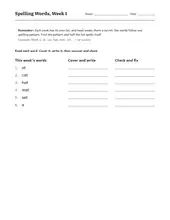
- Spelling words Each week has its own list, and most weeks share a secret: the words follow one spelling pattern. Find the pattern and half the list spells itself.
Phonics 22 skills
Sight words
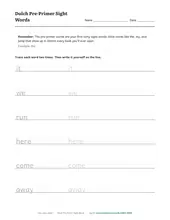
- Dolch pre-primer sight words The pre-primer words are your first forty sight words: little words like the, my, and jump that show up in almost every book you'll ever open.
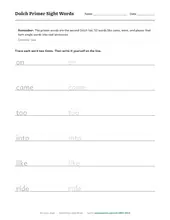
- Dolch primer sight words The primer words are the second Dolch list: 52 words like came, went, and please that turn single words into real sentences.
- Sight words Sight words are the little words you see everywhere. Sound out the parts you can, learn the tricky part by heart, and practice until you know the word in a snap.

Word families
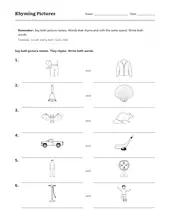
- Rhyming pictures, new Say both picture names. Words that rhyme end with the same sound. Write both words.
- Short a word families Words in the same family share their ending: cat, hat, and bat are all -at words.
- Short e word families Words in the same family share their ending: pet and wet are -et words; bell and shell are -ell words.
- Short i word families Words in the same family share their ending: win and chin are -in words; kick and stick are -ick words.
- Short o word families Words in the same family share their ending: hop and stop are -op words; rock and clock are -ock words.
- Short u word families Words in the same family share their ending: bug and rug are -ug words; jump and bump are -ump words.


Digraphs
- Beginning digraphs (sh, ch, th) Two letters can team up to make one new sound: sh in ship, ch in chip, th in thin.
- Ending digraphs (sh, ch, th) Letter teams work at the ends of words too: fish ends in sh, lunch ends in ch, bath ends in th.


Syllables
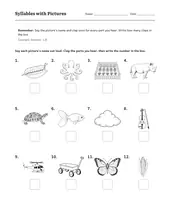
- Counting syllables Syllables are the beats in a word. Clap them out: cat has one, apple has two, banana has three.
- Syllables with pictures, new Say the picture's name and clap once for every part you hear. Write how many claps in the box.

Alphabet & letter sounds
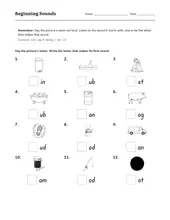
- Beginning sounds, new Say the picture's name out loud. Listen to the sound it starts with, and write the letter that makes that sound.
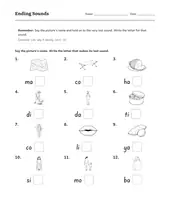
- Ending sounds, new Say the picture's name and hold on to the very last sound. Write the letter for that sound.
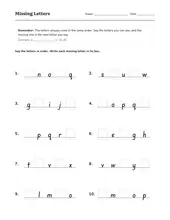
- Missing letters, new The letters always come in the same order. Say the letters you can see, and the missing one is the next letter you say.
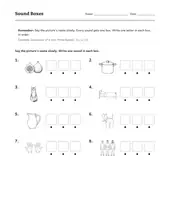
- Sound boxes, new Say the picture's name slowly. Every sound gets one box. Write one letter in each box, in order.
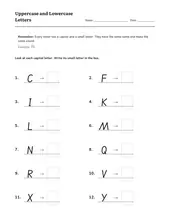
- Uppercase and lowercase letters, new Every letter has a capital and a small letter. They have the same name and make the same sound.
Vowel patterns
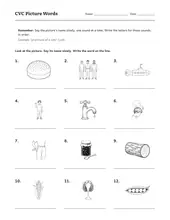
- CVC picture words, new Say the picture's name slowly, one sound at a time. Write the letters for those sounds, in order.
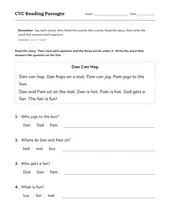
- CVC reading passages, new Say each sound, then blend the sounds into a word. Read the story, then write the word that answers each question.
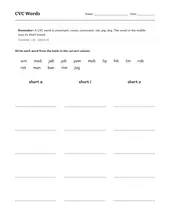
- CVC words A CVC word is consonant, vowel, consonant: cat, pig, dog. The vowel in the middle says its short sound.
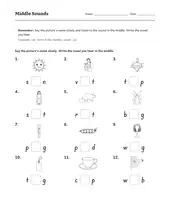
- Middle sounds, new Say the picture's name slowly and listen to the sound in the middle. Write the vowel you hear.
Vocabulary 8 skills
Word relationships
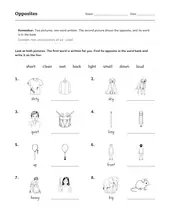
- Opposites, new Two pictures, one word written. The second picture shows the opposite, and its word is in the bank.
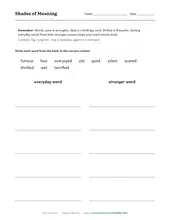
- Shades of meaning Words come in strengths. Glad is a birthday card; thrilled is fireworks. Sorting everyday words from their stronger cousins tunes your word volume knob.
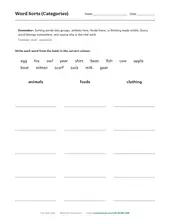
- Word sorts (categories) Sorting words into groups, animals here, foods there, is thinking made visible. Every word belongs somewhere, and saying why is the real work.
Word meanings
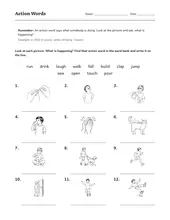
- Action words, new An action word says what somebody is doing. Look at the picture and ask: what is happening?
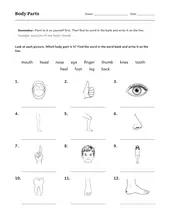
- Body parts, new Point to it on yourself first. Then find its word in the bank and write it on the line.
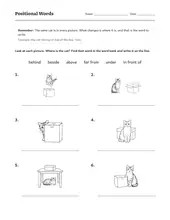
- Positional words, new The same cat is in every picture. What changes is where it is, and that is the word to write.
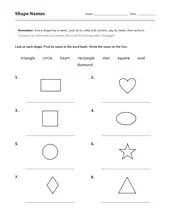
- Shape names, new Every shape has a name. Look at its sides and corners, say its name, then write it.
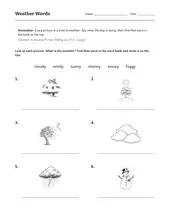
- Weather words, new Every picture is a kind of weather. Say what the day is doing, then find that word in the bank at the top.
Reading comprehension 6 skills
Reading passages
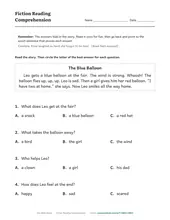
- Fiction reading comprehension The answers hide in the story. Read it once for fun, then go back and point to the exact sentence that proves each answer.
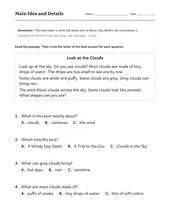
- Main idea and details, new The main idea is what the whole passage is about, in one sentence. The details are the smaller facts that back it up.
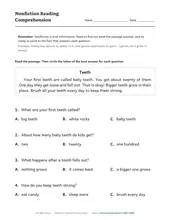
- Nonfiction reading comprehension Nonfiction is true information. Read to find out what the passage teaches, and be ready to point to the fact that answers each question.
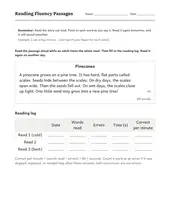
- Reading fluency passages, new Read the passage out loud for one minute. Read it the way you would talk: smooth, at a steady pace, and with the feeling the sentences call for. Fast is not the goal; smooth and accurate is.
Comprehension skills
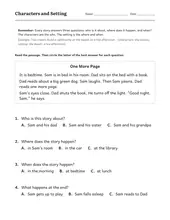
- Characters and setting, new Every story answers three questions: who is it about, where does it happen, and when? The characters are the who. The setting is the where and when.
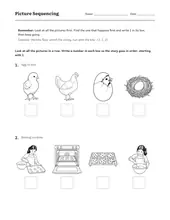
- Picture sequencing, new Look at all the pictures first. Find the one that happens first and write 1 in its box, then keep going.
Handwriting 11 skills
Letter formation
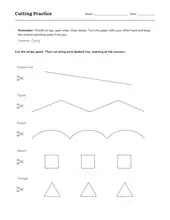
- Cutting practice, new Thumb on top, open wide, close slowly. Turn the paper with your other hand and keep the scissors pointing away from you.
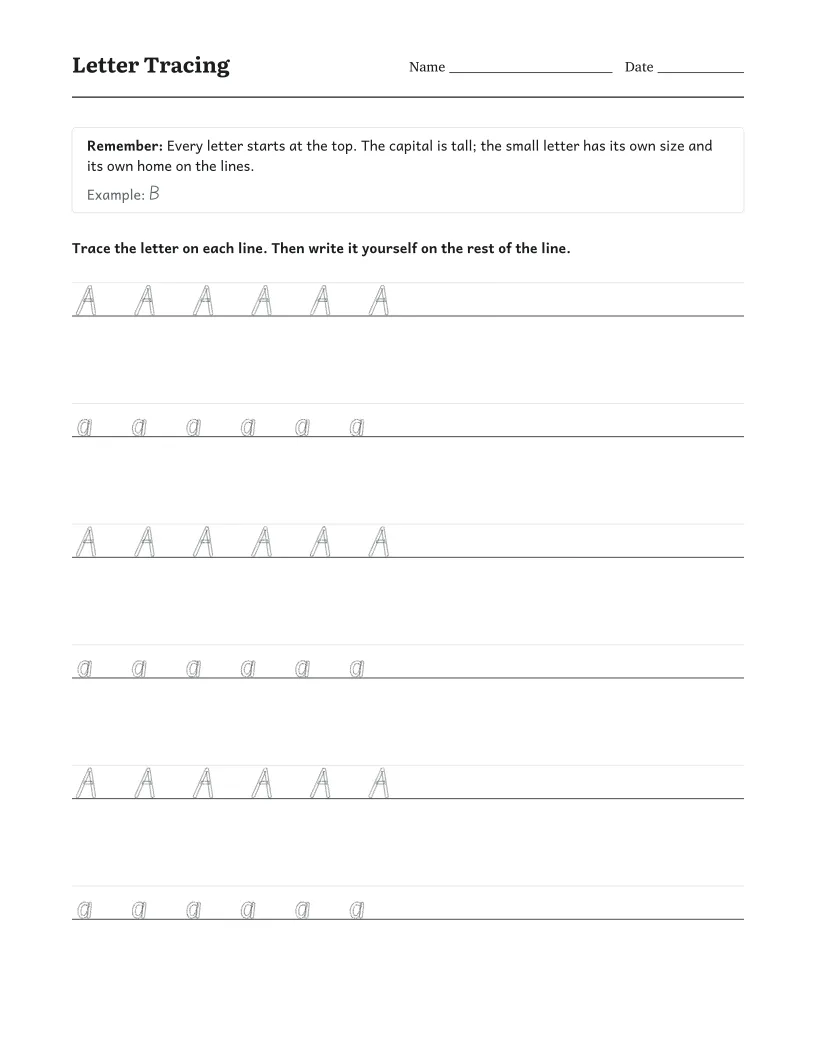
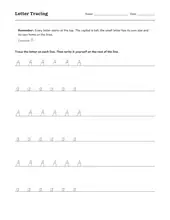
- Letter tracing, new Every letter starts at the top. The capital is tall; the small letter has its own size and its own home on the lines.
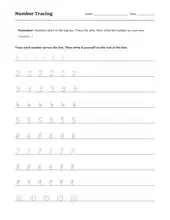
- Number tracing, new Numbers start at the top too. Trace the dots, then write the number on your own.
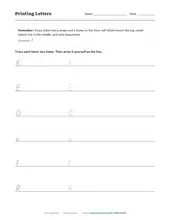
- Printing letters Every letter has a shape and a home on the lines: tall letters touch the top, small letters live in the middle, and tails hang below.
- Shape patterns, new A pattern repeats. Say the shapes out loud, find the part that repeats, and draw the shape that comes next.
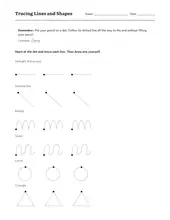
- Tracing lines and shapes, new Put your pencil on a dot. Follow its dotted line all the way to the end without lifting your pencil.

Words and joins
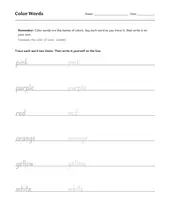
- Color words, new Color words are the names of colors. Say each word as you trace it, then write it on your own.
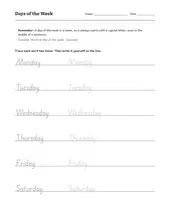
- Days of the week, new A day of the week is a name, so it always starts with a capital letter, even in the middle of a sentence.
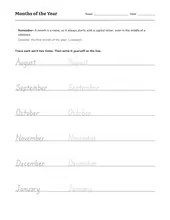
- Months of the year, new A month is a name, so it always starts with a capital letter, even in the middle of a sentence.
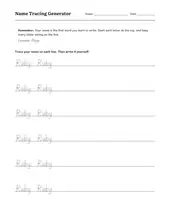
- Name tracing generator, new Your name is the first word you learn to write. Start each letter at the top, and keep every letter sitting on the line.
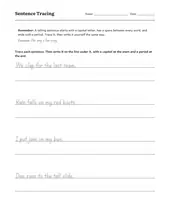
- Sentence tracing, new A telling sentence starts with a capital letter, has a space between every word, and ends with a period. Trace it, then write it yourself the same way.
Writing 3 skills
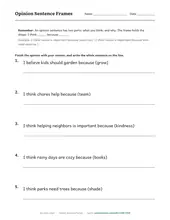
- Opinion sentence frames An opinion sentence has two parts: what you think, and why. The frame holds the shape: I think ___ because ___.
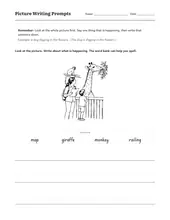
- Picture writing prompts, new Look at the whole picture first. Say one thing that is happening, then write that sentence down.
- Sentence writing A sentence needs a capital at the front, an idea in the middle, and an end mark: a period, or a question mark if it asks. Take the two words, build the idea, write it whole.
About kindergarten English
Every sheet below prints free with an answer key, and most draw new words on every print.
English at other grades
All English worksheets: every grade, every topic.
Also for kindergarten: Kindergarten math worksheets.