6th grade English worksheets
6th grade English expects control: pronoun-antecedent agreement, subordinating conjunctions, and the figurative language that lifts writing.
Nothing in 6th grade English matches that. Search every grade
Grammar 12 skills
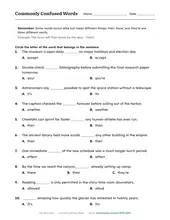
- Commonly confused words Some words sound alike but mean different things: their, there, and they're are three different words.
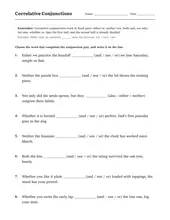
- Correlative conjunctions Correlative conjunctions work in fixed pairs: either/or, neither/nor, both/and, not only/but also, whether/or. Spot the first half, and the second half is already decided.
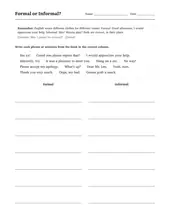
- Formal or informal? English wears different clothes for different rooms. Formal: Good afternoon; I would appreciate your help. Informal: Hey! Wanna play? Both are correct, in their place.
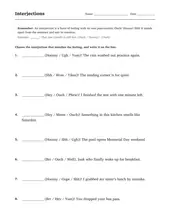
- Interjections An interjection is a burst of feeling with its own punctuation: Ouch! Hooray! Shh! It stands apart from the sentence and sets its emotion.
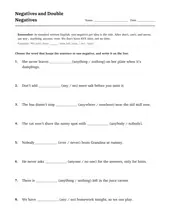
- Negatives and double negatives In standard written English, one negative per idea is the rule. After don't, can't, and never, use any-, anything, anyone, ever: We don't have ANY time, not no time.
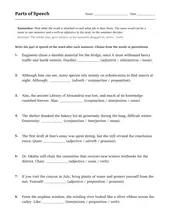
- Parts of speech, new Ask what the word does in this sentence: a noun names something, a verb shows an action or a state of being, an adjective describes a noun, an adverb tells how, when, where or how often, and a pronoun takes the place of a noun.
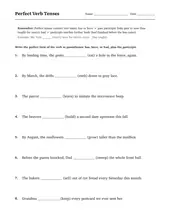
- Perfect verb tenses Perfect tenses connect two times: has or have + past participle links past to now (has taught for years); had + participle reaches further back (had finished before the bus came).
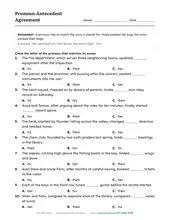
- Pronoun-antecedent agreement A pronoun has to match the noun it stands for: Maya packed her bag, and the twins packed their bags. In school writing, a team acting as one takes its, and each of the girls takes her.
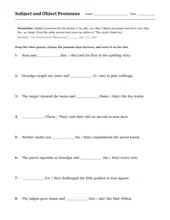
- Subject and object pronouns Subject pronouns do the action: I, he, she, we, they. Object pronouns receive it: me, him, her, us, them. Drop the other person and your ear solves it: 'The coach chose me.'
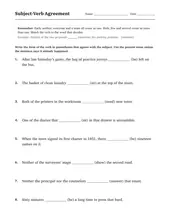
- Subject-verb agreement, new The verb has to match the subject: one dog barks, two dogs bark.
- Subordinating conjunctions Subordinating conjunctions join a helper idea to a main idea and name the link: because (why), although (surprise), until (time), if (condition).
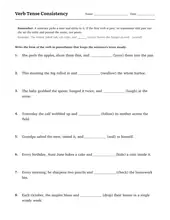
- Verb tense consistency A sentence picks a time and sticks to it. If the first verb is past, its teammates ride past too: she set the table and poured the water, not pours.

Sentence structure 3 skills
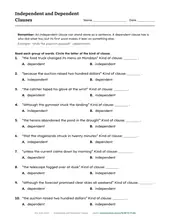
- Independent and dependent clauses An independent clause can stand alone as a sentence. A dependent clause has a who-did-what too, but its first word makes it lean on something else.
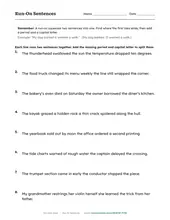
- Run-on sentences A run-on squeezes two sentences into one. Find where the first idea ends, then add a period and a capital letter.
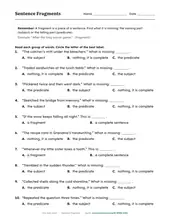
- Sentence fragments A fragment is a piece of a sentence. Find what it is missing: the naming part (subject) or the telling part (predicate).
Punctuation 5 skills
- Commas after introductory phrases When a sentence starts with a warm-up phrase, a comma marks where the real sentence begins: After the storm, we raked the yard.
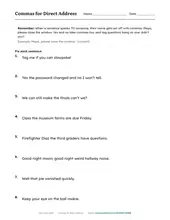
- Commas for direct address When a sentence speaks TO someone, their name gets set off with commas: Maya, please close the window. Yes and no take commas too, and tag questions hang on one: didn't you?
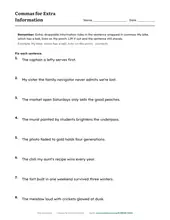
- Commas for extra detail Extra information rides in the sentence wrapped in commas: My bike, which has a bell, lives on the porch. Lift it out and you still know which bike.
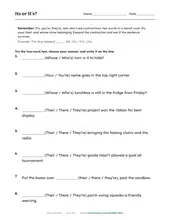
- Contractions or possessives? It's, you're, they're, and who's are contractions: two words in a trench coat. Its, your, their, and whose show belonging. Expand the contraction and see if the sentence still makes sense.
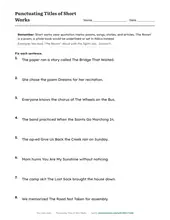
- Punctuating titles of short works Short works wear quotation marks: poems, songs, stories, and articles. 'The Raven' is a poem; a whole book would be underlined or set in italics instead.

Spelling 2 skills
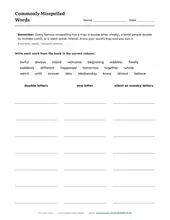
- Commonly misspelled words Every famous misspelling has a trap: a double letter (really), a letter people double by mistake (until), or a silent sneak (friend). Know your word's trap and you own it.
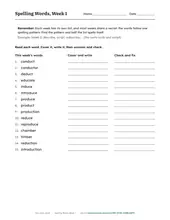
- Spelling words Each week has its own list, and most weeks share a secret: the words follow one spelling pattern. Find the pattern and half the list spells itself.
Phonics 1 skills
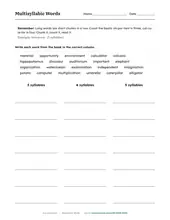
- Multisyllabic words Long words are short chunks in a row. Count the beats: im-por-tant is three, cal-cu-la-tor is four. Chunk it, count it, read it.
Vocabulary 15 skills
Word relationships
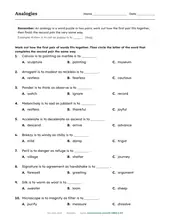
- Analogies An analogy is a word puzzle in two pairs: work out how the first pair fits together, then finish the second pair the very same way.
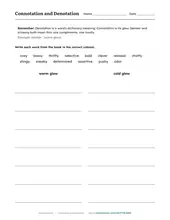
- Connotation and denotation Denotation is a word's dictionary meaning. Connotation is its glow. Slender and scrawny both mean thin; one compliments, one insults.
Prefixes and suffixes
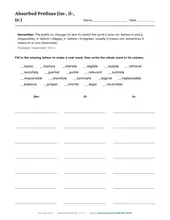
- Absorbed prefixes (im-, il-, ir-) The prefix in- changes its skin to match the word it joins: im- before m and p (impossible), il- before l (illegal), ir- before r (irregular). Usually it means not; sometimes it means in or into (illuminate).
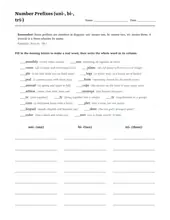
- Number prefixes (uni-, bi-, tri-) Some prefixes are numbers in disguise: uni- means one, bi- means two, tri- means three. A tricycle is a three-wheeler by name.
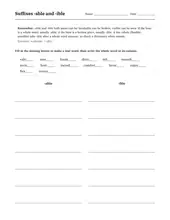
- Suffixes -able and -ible -able and -ible both mean can-be: breakable can be broken, visible can be seen. If the base is a whole word, usually -able; if the base is a broken piece, usually -ible. A few rebels (flexible, sensible) take -ible after a whole word anyway, so check a dictionary when unsure.
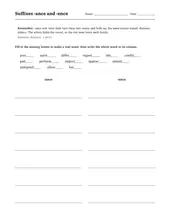
- Suffixes -ance and -ence -ance and -ence both turn ideas into nouns and both say the same unsure sound: distance, silence. The schwa hides the vowel, so the eye must learn each family.
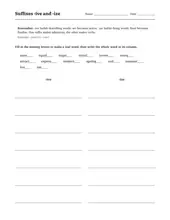
- Suffixes -ive and -ize -ive builds describing words: act becomes active. -ize builds doing words: final becomes finalize. One suffix makes adjectives, the other makes verbs.
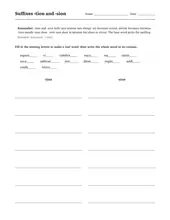
- Suffixes -tion and -sion -tion and -sion both turn actions into things: act becomes action, decide becomes decision. -tion usually says shun. -sion says shun in mission but zhun in vision. The base word picks the spelling.
Greek and Latin roots
- Greek and Latin roots Old Greek and Latin word parts hide inside big English words: tele means far, so telescope, telephone, and television all reach across distance.

Figurative language
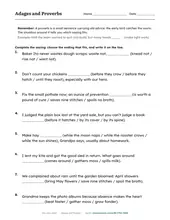
- Adages and proverbs A proverb is a small sentence carrying old advice: the early bird catches the worm. The situation around it tells you which saying fits.
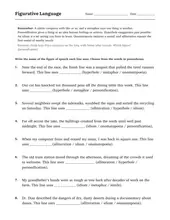
- Figurative language, new A simile compares with like or as, a metaphor says one thing is another, personification gives a thing a human action, hyperbole stretches the truth, an idiom is a saying with its own meaning, onomatopoeia is a sound word, and alliteration repeats a first sound.
- Idioms An idiom means something different from its exact words. A piece of cake means easy; raining cats and dogs means pouring. The sentence around it tells you which.
- Personification and hyperbole Personification gives human actions to things: the wind whispered. Hyperbole exaggerates on purpose: I've told you a million times.
- Similes and metaphors A simile compares with like or as: brave as a lion. A metaphor says one thing IS another: the classroom was a zoo.


Context clues
- Context clues The sentence around a hard word usually hides its meaning. Read past the word, find the clue, then decide: The arid desert had not seen rain for months, so arid must mean very dry.

Reading comprehension 23 skills
Reading passages
- Animal reading comprehension, new An animal passage tells how an animal's body and habits help it live. Answer from the passage, not from what you already know about the animal.
- Author's purpose, new Every writer has a reason for writing. The three big reasons are easy to remember as PIE: to Persuade (change your mind), to Inform (teach you facts), or to Entertain (tell you a fun story). To find the purpose, ask what the writer wants you to do after reading.
- Fact vs opinion, new A fact can be checked and proven: a spider has eight legs. An opinion tells what someone thinks or feels: spiders are creepy. Ask the test question: could we look this up and settle it?
- Fiction reading comprehension The answers hide in the story. Read it once for fun, then go back and point to the exact sentence that proves each answer.
- Main idea and details The main idea is what the whole passage is about, in one sentence. The details are the smaller facts that back it up.
- Making inferences, new An inference is a smart guess the writer never says out loud. You mix a clue from the text with what you already know: if a character shivers and rubs her hands, you can infer she is cold.
- Nonfiction reading comprehension Nonfiction is true information. Read to find out what the passage teaches, and be ready to point to the fact that answers each question.
- Paired passages Two passages, one topic. Read both all the way through before you answer. Some questions are about one passage, some are about both, and the question always tells you which.
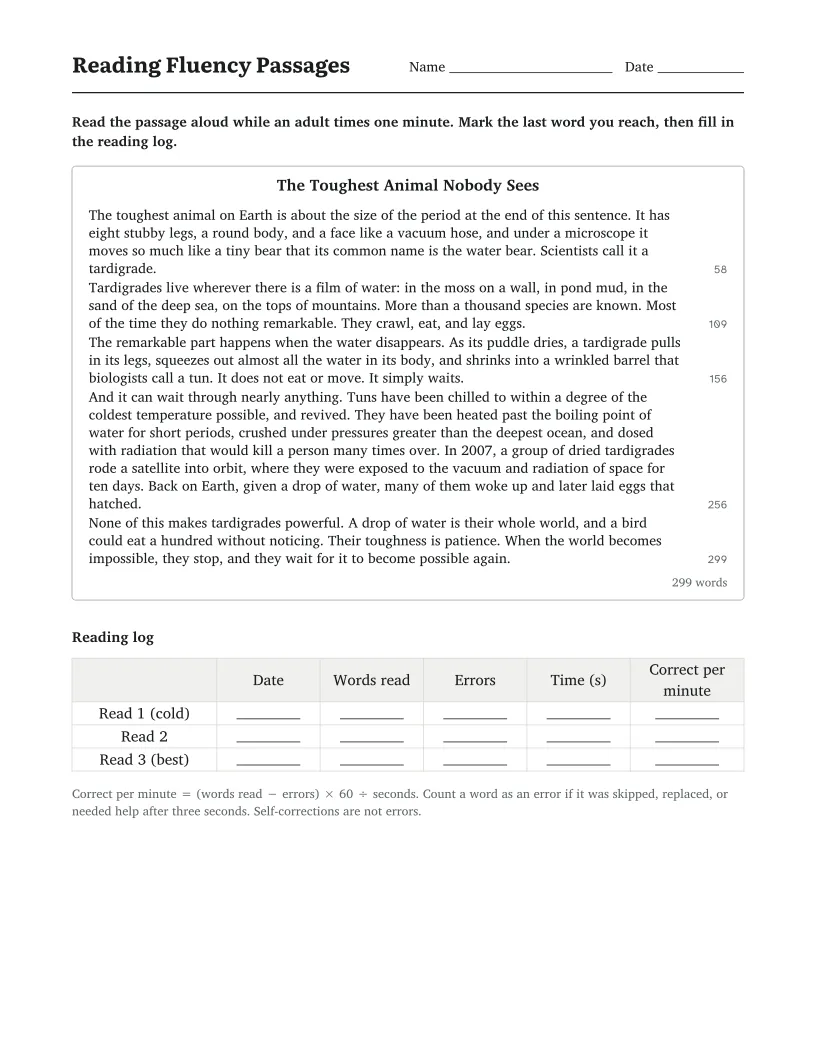
- Reading fluency passages Read the passage out loud for one minute. Read it the way you would talk: smooth, at a steady pace, and with the feeling the sentences call for. Fast is not the goal; smooth and accurate is.
- Science reading comprehension, new A science passage explains how something in the world works. Find the sentence that answers each question, even when it surprises you.
Comprehension skills
- Author's claim A claim is what the author wants you to believe. Evidence is what they show you so you will. Find the claim first; everything else in the piece is working for it.
- Cause and effect, new A cause is why something happened. An effect is what happened because of it. Ask: what happened, and what made it happen?
- Character traits, new A trait is what a person is like on the inside, and actions are the proof. The story never says the word; it shows you, and you name it.
- Compare and contrast, new Comparing finds how two things are alike. Contrasting finds how they differ. Good readers do both at once.
- Genres A genre is a kind of writing. Every kind leaves clues: talking animals with a lesson, long-ago magic, true facts, or a story that could happen on your own street.
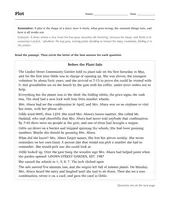
- Plot A plot is the shape of a story: how it starts, what goes wrong, the moment things turn, and how it all works out.
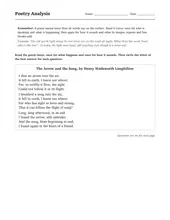
- Poetry analysis, new A poem means more than its words say on the surface. Read it twice: once for who is speaking and what is happening, then again for how it sounds and what its images, repeats and line breaks add.
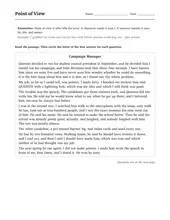
- Point of view Point of view is who tells the story. A character inside it says I. A narrator outside it says he, she, and names.
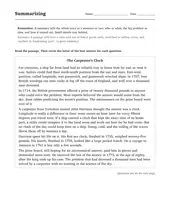
- Summarizing A summary tells the whole story in a sentence or two: who or what, the big problem or idea, and how it turned out. Small details stay behind.
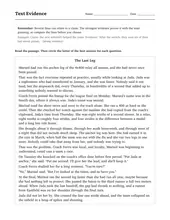
- Text evidence, new Evidence is the exact line that proves a point. Don't tell me the story says so. Show me the sentence where it says so.
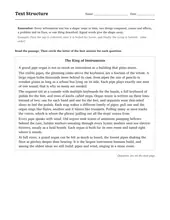
- Text structure Every information text has a shape: steps in time, two things compared, causes and effects, a problem and its fixes, or one thing described. Signal words give the shape away.
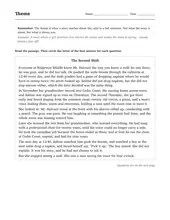
- Theme The theme is what a story teaches about life, said in a full sentence. Not what the story is about, but what it shows you.
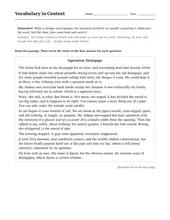
- Vocabulary in context When a strange word appears, the sentences around it are usually explaining it. Read past the word, find the clues, then come back and catch it.
Writing 1 skills
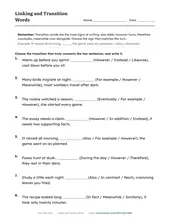
- Linking and transition words Transition words are the road signs of writing: also adds, however turns, therefore concludes, meanwhile runs alongside. Choose the sign that matches the turn.
About 6th grade English
Each worksheet holds one skill to a page, prints free with its answer key, and most draw new questions on every print.
Start-of-year review
Sixth grade reading is heavier on nonfiction and nuance. These 5th grade sheets confirm the comprehension and grammar habits are in place.
English at other grades
All English worksheets: every grade, every topic.
Also for 6th grade: 6th grade math worksheets.