Handwriting worksheets
Letter formation in print and cursive, on classic penmanship guides.
Nothing in handwriting matches that. Search the whole site
Skip past the listLetter formation 7 skills
- Cursive alphabet Cursive letters flow: each one is written in one motion, with an entry stroke that leads in and an exit stroke that leads out.
- Cutting practice, new Thumb on top, open wide, close slowly. Turn the paper with your other hand and keep the scissors pointing away from you.
- Letter tracing, new Every letter starts at the top. The capital is tall; the small letter has its own size and its own home on the lines.
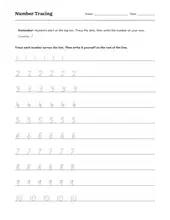
- Number tracing, new Numbers start at the top too. Trace the dots, then write the number on your own.
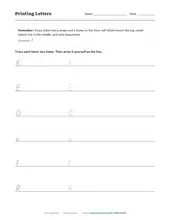
- Printing letters Every letter has a shape and a home on the lines: tall letters touch the top, small letters live in the middle, and tails hang below.
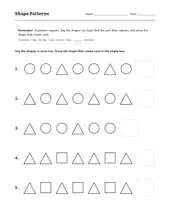
- Shape patterns, new A pattern repeats. Say the shapes out loud, find the part that repeats, and draw the shape that comes next.
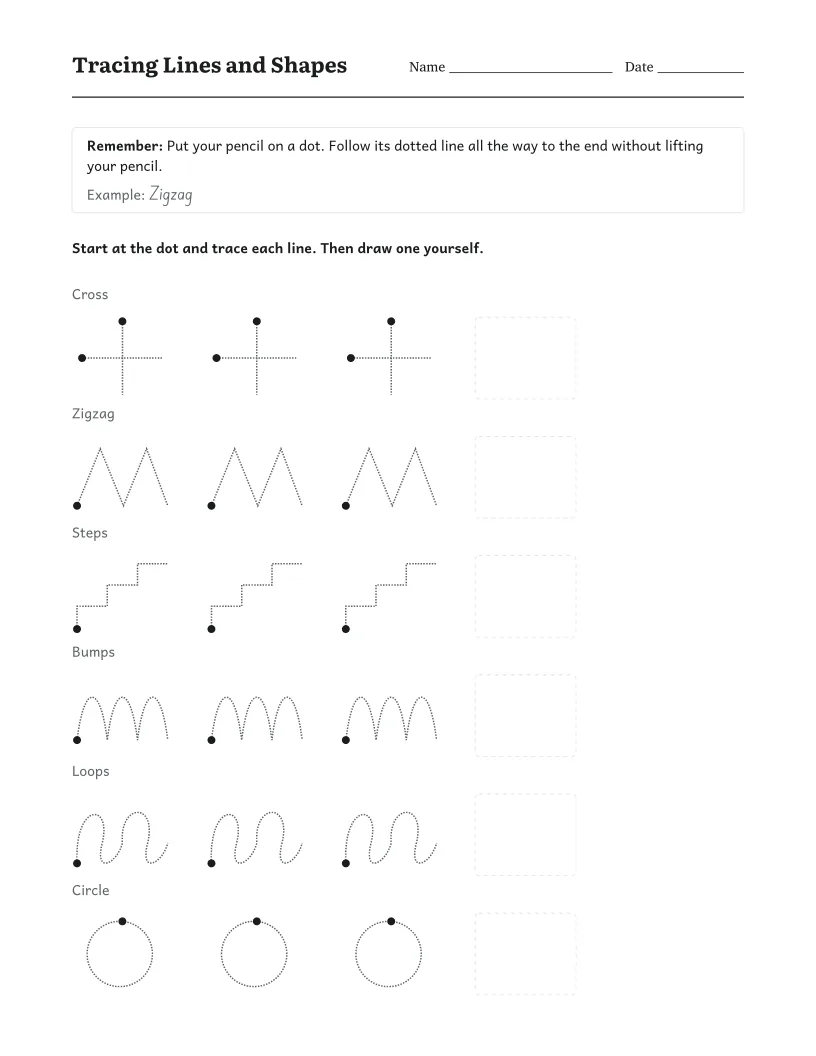
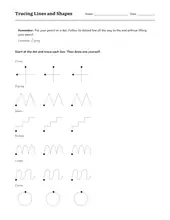
- Tracing lines and shapes, new Put your pencil on a dot. Follow its dotted line all the way to the end without lifting your pencil.
Words and joins 7 skills
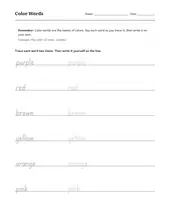
- Color words, new Color words are the names of colors. Say each word as you trace it, then write it on your own.
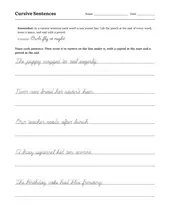
- Cursive sentences, new In a cursive sentence each word is one joined line. Lift the pencil at the end of every word, leave a space, and end with a period.
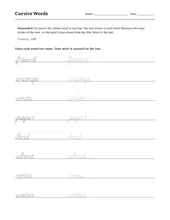
- Cursive words In cursive the whole word is one line: the exit stroke of each letter becomes the entry stroke of the next, so the pencil stays down from the first letter to the last.
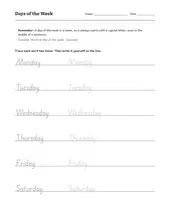
- Days of the week, new A day of the week is a name, so it always starts with a capital letter, even in the middle of a sentence.
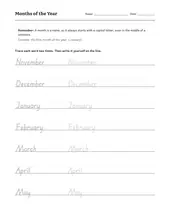
- Months of the year, new A month is a name, so it always starts with a capital letter, even in the middle of a sentence.
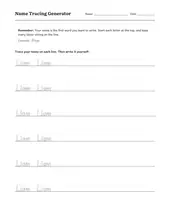
- Name tracing generator, new Your name is the first word you learn to write. Start each letter at the top, and keep every letter sitting on the line.
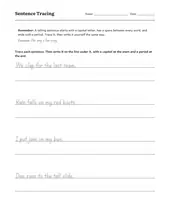
- Sentence tracing, new A telling sentence starts with a capital letter, has a space between every word, and ends with a period. Trace it, then write it yourself the same way.
All English worksheets →
More English topics: Grammar · Sentence structure · Capitalization · Punctuation · Spelling · Phonics · Vocabulary · Reading comprehension · Writing