Sentence structure worksheets
Building complete sentences, from first subjects and predicates to complex clauses.
Nothing in sentence structure matches that. Search the whole site
Skip past the listSentence types 1 skills
- Types of sentences A statement tells. A question asks. A command orders. An exclamation bursts with feeling.

Sentence building 7 skills
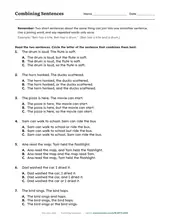
- Combining sentences Two short sentences about the same thing can join into one smoother sentence. Use a joining word, and say repeated words only once.
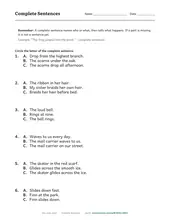
- Complete sentences A complete sentence names who or what, then tells what happens. If a part is missing, it is not a sentence yet.
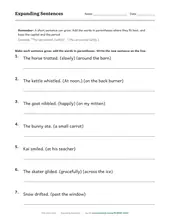
- Expanding sentences A short sentence can grow. Add the words in parentheses where they fit best, and keep the capital and the period.
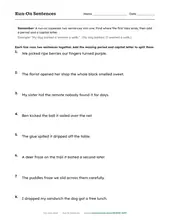
- Run-on sentences A run-on squeezes two sentences into one. Find where the first idea ends, then add a period and a capital letter.
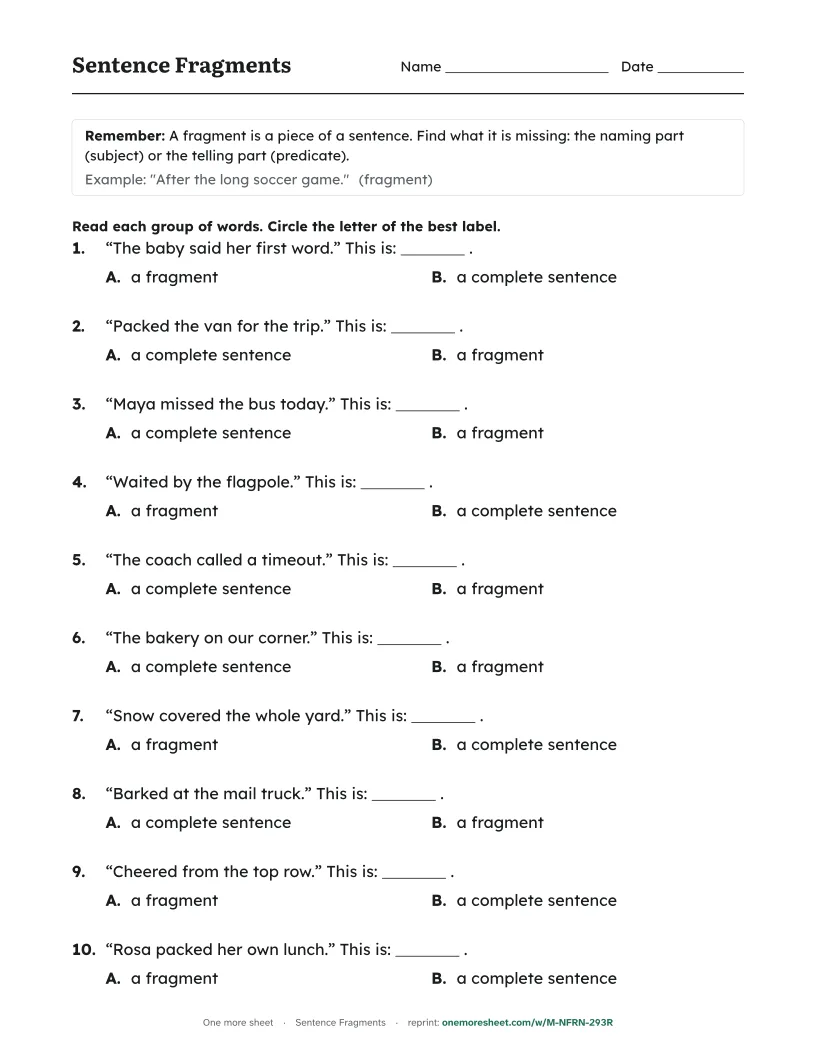
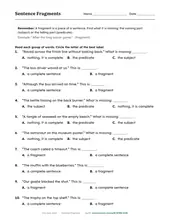
- Sentence fragments A fragment is a piece of a sentence. Find what it is missing: the naming part (subject) or the telling part (predicate).
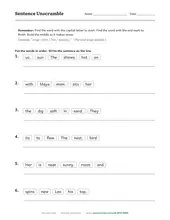
- Sentence unscramble Find the word with the capital letter to start. Find the word with the end mark to finish. Build the middle so it makes sense.
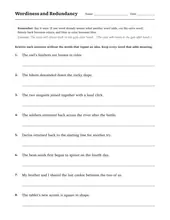
- Wordiness and redundancy Say it once. If one word already means what another word adds, cut the extra word. Return back becomes return, and blue in color becomes blue.
Sentence parts 2 skills
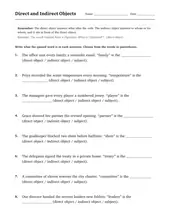
- Direct and indirect objects The direct object answers what after the verb. The indirect object answers to whom or for whom, and it sits in front of the direct object.
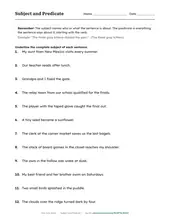
- Subject and predicate The subject names who or what the sentence is about. The predicate is everything the sentence says about it, starting with the verb.
Sentence structure 7 skills
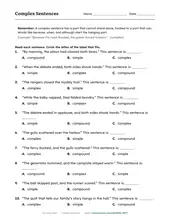
- Complex sentences A complex sentence has a part that cannot stand alone, hooked to a part that can. Words like because, when, and although start the hanging part.
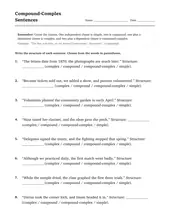
- Compound-complex sentences Count the clauses. One independent clause is simple, two is compound, one plus a dependent clause is complex, and two plus a dependent clause is compound-complex.
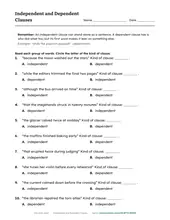
- Independent and dependent clauses An independent clause can stand alone as a sentence. A dependent clause has a who-did-what too, but its first word makes it lean on something else.
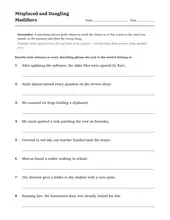
- Misplaced and dangling modifiers A describing phrase grabs whatever word sits closest to it. Put it next to the word you meant, or the sentence describes the wrong thing.
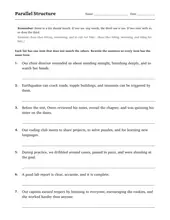
- Parallel structure Items in a list should match. If two are -ing words, the third one is too. If two start with to, so does the third.
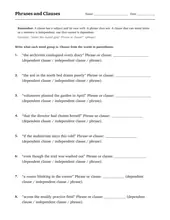
- Phrases and clauses A clause has a subject and its own verb. A phrase does not. A clause that can stand alone as a sentence is independent; one that cannot is dependent.
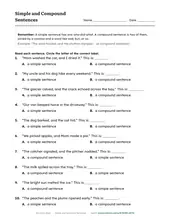
- Simple and compound sentences A simple sentence has one who-did-what. A compound sentence is two of them, joined by a comma and a word like and, but, or so.
All English worksheets →
More English topics: Grammar · Capitalization · Punctuation · Spelling · Phonics · Vocabulary · Reading comprehension · Handwriting · Writing