6th grade reading comprehension worksheets
23 reading comprehension skills at 6th grade, one sheet each, free with its answer key: animal reading comprehension, author's claim, author's purpose, and more.
Nothing in 6th grade reading comprehension matches that. Search every grade
Reading passages
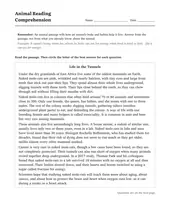
- Animal reading comprehension, new An animal passage tells how an animal's body and habits help it live. Answer from the passage, not from what you already know about the animal.
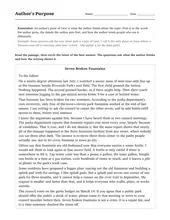
- Author's purpose, new Every writer has a reason for writing. The three big reasons are easy to remember as PIE: to Persuade (change your mind), to Inform (teach you facts), or to Entertain (tell you a fun story). To find the purpose, ask what the writer wants you to do after reading.
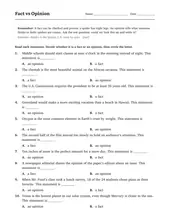
- Fact vs opinion, new A fact can be checked and proven: a spider has eight legs. An opinion tells what someone thinks or feels: spiders are creepy. Ask the test question: could we look this up and settle it?
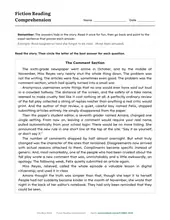
- Fiction reading comprehension The answers hide in the story. Read it once for fun, then go back and point to the exact sentence that proves each answer.
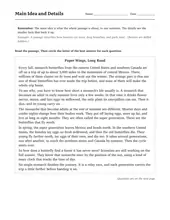
- Main idea and details The main idea is what the whole passage is about, in one sentence. The details are the smaller facts that back it up.
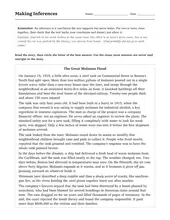
- Making inferences, new An inference is a smart guess the writer never says out loud. You mix a clue from the text with what you already know: if a character shivers and rubs her hands, you can infer she is cold.
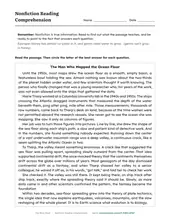
- Nonfiction reading comprehension Nonfiction is true information. Read to find out what the passage teaches, and be ready to point to the fact that answers each question.
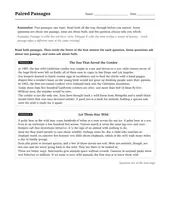
- Paired passages Two passages, one topic. Read both all the way through before you answer. Some questions are about one passage, some are about both, and the question always tells you which.
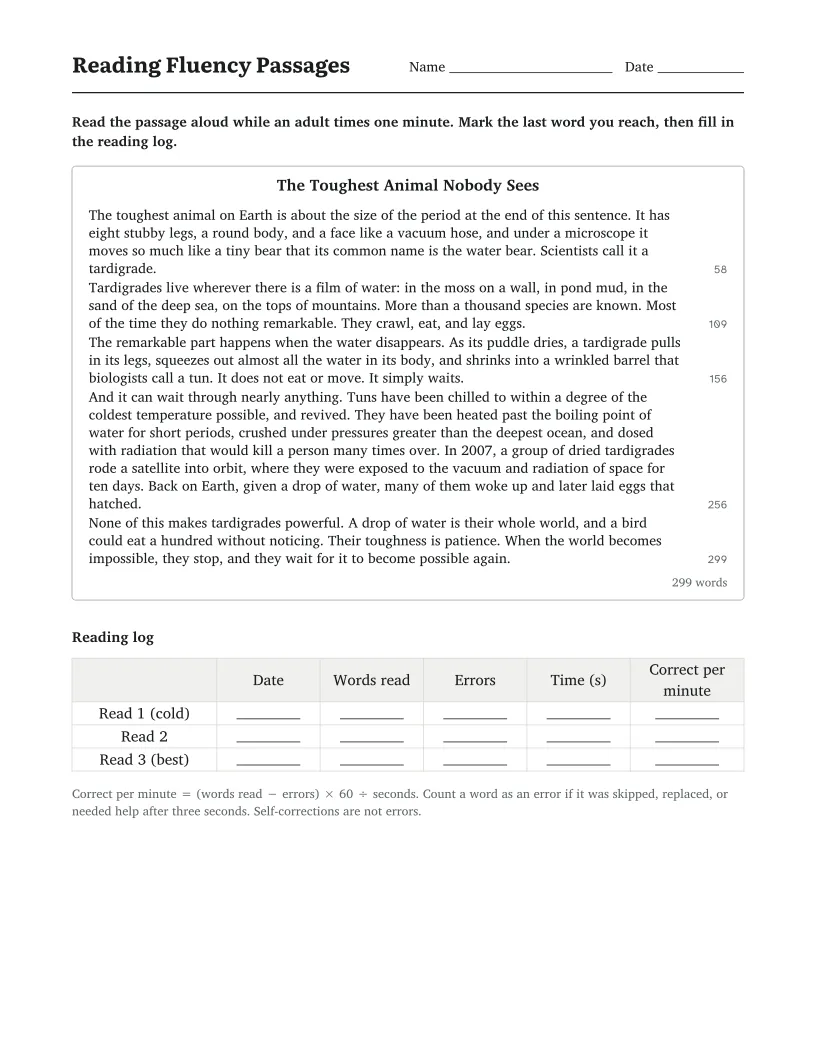
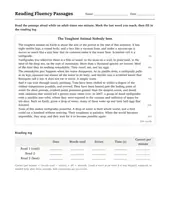
- Reading fluency passages Read the passage out loud for one minute. Read it the way you would talk: smooth, at a steady pace, and with the feeling the sentences call for. Fast is not the goal; smooth and accurate is.
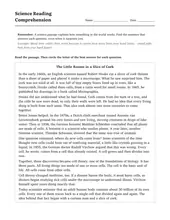
- Science reading comprehension, new A science passage explains how something in the world works. Find the sentence that answers each question, even when it surprises you.
Comprehension skills
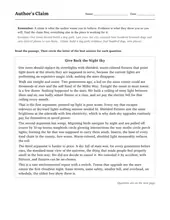
- Author's claim A claim is what the author wants you to believe. Evidence is what they show you so you will. Find the claim first; everything else in the piece is working for it.
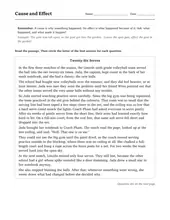
- Cause and effect, new A cause is why something happened. An effect is what happened because of it. Ask: what happened, and what made it happen?
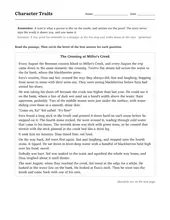
- Character traits, new A trait is what a person is like on the inside, and actions are the proof. The story never says the word; it shows you, and you name it.
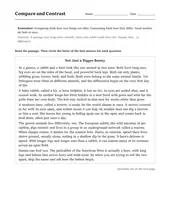
- Compare and contrast, new Comparing finds how two things are alike. Contrasting finds how they differ. Good readers do both at once.
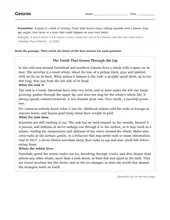
- Genres A genre is a kind of writing. Every kind leaves clues: talking animals with a lesson, long-ago magic, true facts, or a story that could happen on your own street.
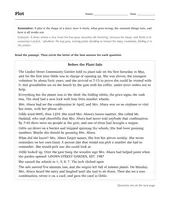
- Plot A plot is the shape of a story: how it starts, what goes wrong, the moment things turn, and how it all works out.
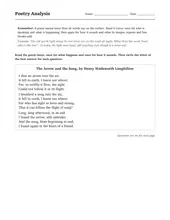
- Poetry analysis, new A poem means more than its words say on the surface. Read it twice: once for who is speaking and what is happening, then again for how it sounds and what its images, repeats and line breaks add.
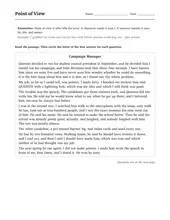
- Point of view Point of view is who tells the story. A character inside it says I. A narrator outside it says he, she, and names.
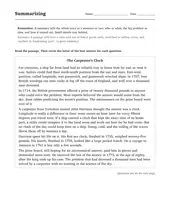
- Summarizing A summary tells the whole story in a sentence or two: who or what, the big problem or idea, and how it turned out. Small details stay behind.
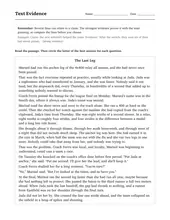
- Text evidence, new Evidence is the exact line that proves a point. Don't tell me the story says so. Show me the sentence where it says so.
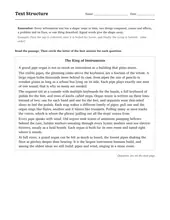
- Text structure Every information text has a shape: steps in time, two things compared, causes and effects, a problem and its fixes, or one thing described. Signal words give the shape away.
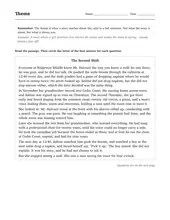
- Theme The theme is what a story teaches about life, said in a full sentence. Not what the story is about, but what it shows you.
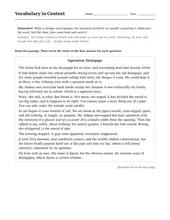
- Vocabulary in context When a strange word appears, the sentences around it are usually explaining it. Read past the word, find the clues, then come back and catch it.
All 6th grade English worksheets →
More 6th grade English: Grammar · Sentence structure · Punctuation · Spelling · Vocabulary
Reading comprehension at other grades: K · 1st · 2nd · 3rd · 4th · 5th · 7th · 8th