Firsthand and secondhand accounts worksheets
Each click picks one of the 26 passages written for this grade. Every sheet comes with its answer key. You don't need to sign up.
A firsthand account comes from someone who was there: I saw, I heard, I felt. A secondhand account is put together afterward from gathered information. Each kind knows things the other cannot.
Three grades, each its own sheet. Print one here, or open a grade for examples and teaching notes.
Print by grade
-
3rd grade
Third grade worksheets pair letters, diaries, and logs with informational reports on similar topics. Questions ask what kind of account each is, which words give it away, and what this kind of telling can offer that the other cannot.
-
4th grade Core grade
Each click picks one of the 26 passages written for this grade. Every sheet comes with its answer key. You don't need to sign up.
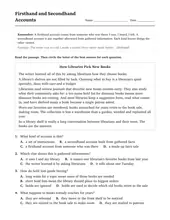
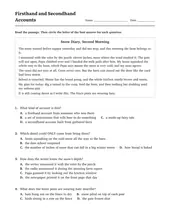
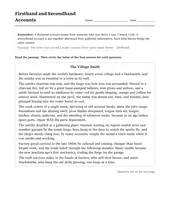
Fourth grade is where the standard lives: comparing how a firsthand and a secondhand account handle information. Questions dig into the trade: the diary's cold water and wobbling wagon against the report's numbers, dates, and overview.
-
5th grade
Fifth grade questions weigh the accounts as sources: what the memoir knows that the history cannot, where the report is stronger, and why researchers want both. Reading like this is the start of working with real sources, which is coming in every subject.
More on comprehension skills
- Author's claim 4th–6th
- Cause and effect 1st–6th
- Character traits 2nd–6th
- Characters and setting K–3rd
- Compare and contrast 1st–6th
- Genres 2nd–6th
- Making predictions 1st–3rd
- Picture sequencing Pre-K–2nd
- Plot 2nd–6th
- Poetry analysis 4th–8th
- Point of view 2nd–8th
- Problem and solution 1st–5th
- Sequencing 1st–3rd
- Summarizing 3rd–6th
- Text evidence 3rd–8th
- Text features 1st–5th
- Text structure 4th–8th
- Theme 2nd–8th
- Vocabulary in context 3rd–6th
All reading comprehension worksheets →
Or all English worksheets: every grade, every topic.