Paired passages worksheets
Each click picks one of the 13 passage pairs written for this grade. Every sheet comes with its answer key. You don't need to sign up.
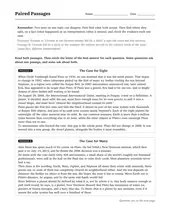
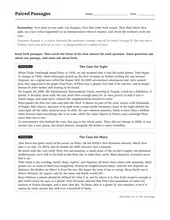
Two passages, one topic. Read both all the way through before you answer. Some questions are about one passage, some are about both, and the question always tells you which.
Six grades, three different sets of passage pairs: 3rd and 4th grade share one, so do 5th and 6th grade, and so do 7th and 8th grade. Print one here, or open a grade for examples and teaching notes.
Print by grade
-
3rd grade
Third grade paired passages put two short texts side by side, fiction and nonfiction, on one shared topic: a ferry and the bridge that replaced it, two accounts of the same storm, a story and a fact page about the same animal. Questions ask about each text and then about both, the first step toward comparing sources.
-
4th grade Core grade
Each click picks one of the 13 passage pairs written for this grade. Every sheet comes with its answer key. You don't need to sign up.
Fourth grade pairs grow to about 150 words each and the comparison questions sharpen: how the two texts differ in purpose, which detail both include, what one text explains that the other only mentions. This is the test-prep genre teachers ask for, built on the same reviewed passages as the rest of the site.
-
5th grade
Fifth grade pairs use longer texts, often two informational pieces that approach a topic from different angles, or a story and an article that share a theme. Questions ask your child to integrate information from both texts and to notice what each one leaves out.
-
6th grade
Sixth grade pairs compare texts in different forms or genres on the same topic: a memoir and a report, a poem and an article, two arguments. Questions target how the form shapes what each text can say, which is what RL.6.9 and RI.6.9 mean by comparing approaches.
-
7th grade
Seventh grade pairs put two authors on one topic who shape it differently: one leans on a diary, the other on a lab result; one reads a fact as a warning, the other as a success. Questions ask what both accept, what each author emphasizes, and how the evidence each one picks leads to a different view.
-
8th grade
Eighth grade pairs disagree outright. Two accounts of one event or question conflict, and the questions ask where: on a matter of fact (what happened) or on interpretation (what it means). Students find the common ground first, then the exact point of conflict, and weigh the evidence behind each side.
More on reading passages
All reading comprehension worksheets →
Or all English worksheets: every grade, every topic.