Idioms worksheets
Each print is a different sheet with its own answer key. You don't need to sign up.
An idiom means something different from its exact words. A piece of cake means easy; raining cats and dogs means pouring. The sentence around it tells you which.
Six grades, three different sets of sentences: 3rd to 6th grade share one. Print one here, or open a grade for examples and teaching notes.
Print by grade
-
3rd grade
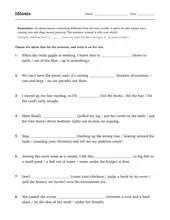
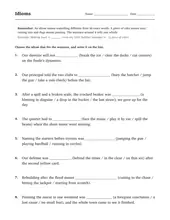
Third graders complete sentences with the idiom the context demands, meeting the common ones: piece of cake, raining cats and dogs, under the weather.
-
4th grade Core grade
Each print is a different sheet with its own answer key. You don't need to sign up.
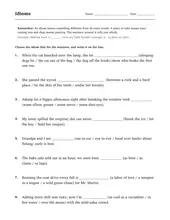
Fourth graders handle a wider set and explain what each idiom means in plain words, the L.4.5.b move.
-
5th grade
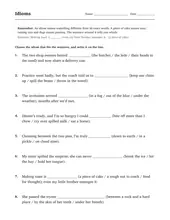
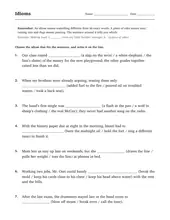
Fifth graders choose among near-miss idioms, where only the context settles it, and begin using idioms in their own writing.
-
6th grade
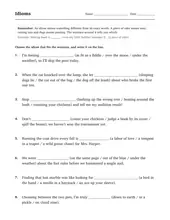
Sixth graders own a broad idiom vocabulary and notice idioms at work in novels, headlines, and conversation everywhere.
-
7th grade
An idiom is a phrase whose meaning you cannot work out from the words in it. Seventh grade idioms come from news writing and novels rather than the playground, and the sentence around each one carries the context a reader uses to pin it down.
-
8th grade
Eighth grade idioms come from editorials, sports pages and novels: pass the buck, read between the lines, a red herring. The sentence still carries the meaning, but the clue often sits a clause away from the blank, so a student has to read the whole sentence before choosing.
More on figurative language
All vocabulary worksheets →
Or all English worksheets: every grade, every topic.