7th grade grammar worksheets
13 grammar skills at 7th grade, one sheet each, free with its answer key: active and passive voice, commonly confused words, conjunctive adverbs, and more.
Every sheet on this page was added on or after Sep 25. See what else is new
Nothing in 7th grade grammar matches that. Search every grade
Verbs
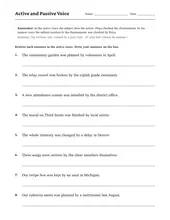
- Active and passive voice In the active voice the subject does the action: Priya checked the thermometer. In the passive voice the subject receives it: the thermometer was checked by Priya.
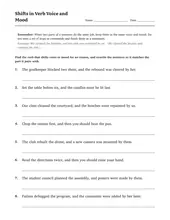
- Shifts in verb voice and mood When two parts of a sentence do the same job, keep them in the same voice and mood. Do not start a set of steps as commands and finish them as a statement.
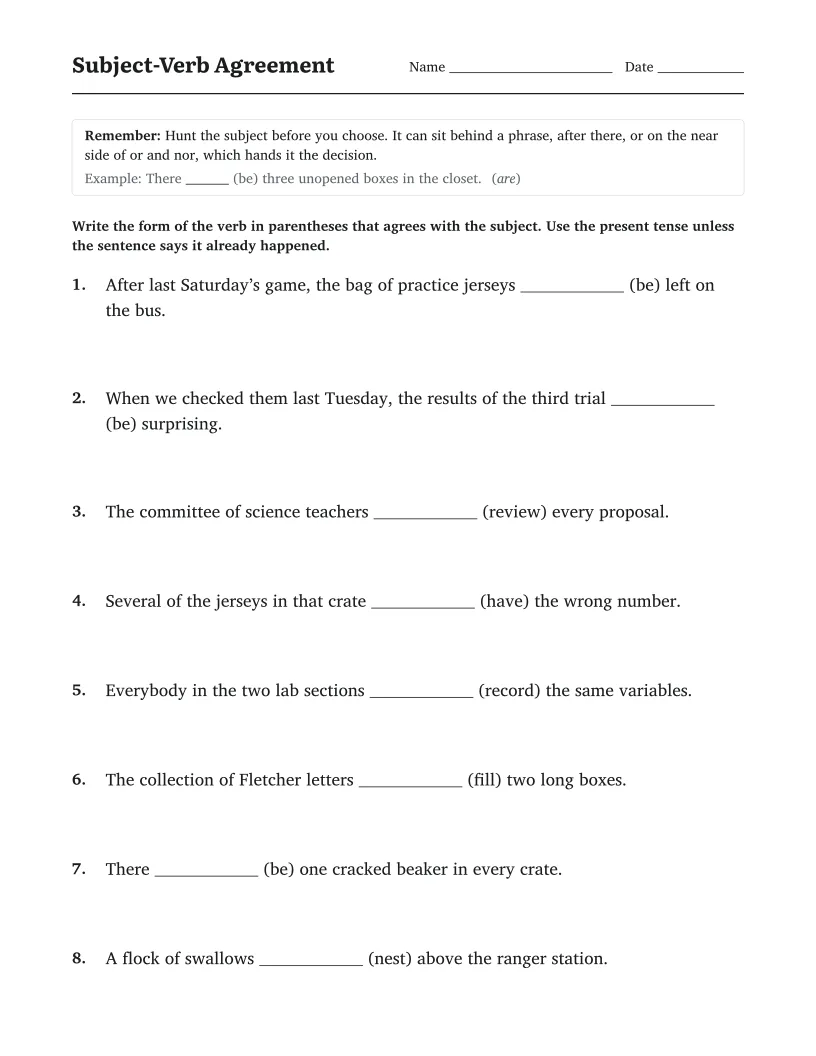
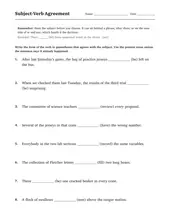
- Subject-verb agreement The verb has to match the subject: one dog barks, two dogs bark.
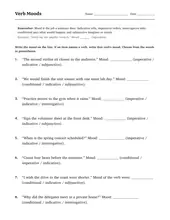
- Verb moods Mood is the job a sentence does. Indicative tells, imperative orders, interrogative asks, conditional says what would happen, and subjunctive imagines or insists.
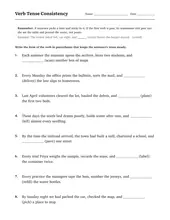
- Verb tense consistency A sentence picks a time and sticks to it. If the first verb is past, its teammates ride past too: she set the table and poured the water, not pours.
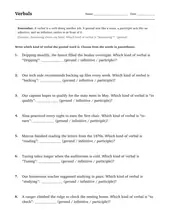
- Verbals A verbal is a verb doing another job. A gerund acts like a noun, a participle acts like an adjective, and an infinitive carries to in front of it.
Pronouns
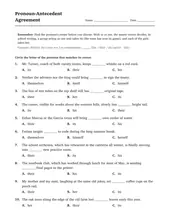
- Pronoun-antecedent agreement A pronoun has to match the noun it stands for: Maya packed her bag, and the twins packed their bags. In school writing, a team acting as one takes its, and each of the girls takes her.
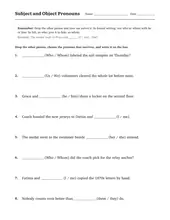
- Subject and object pronouns Subject pronouns do the action: I, he, she, we, they. Object pronouns receive it: me, him, her, us, them. Drop the other person and your ear solves it: 'The coach chose me.'
Conjunctions
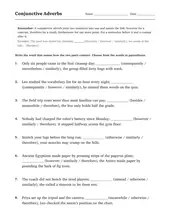
- Conjunctive adverbs A conjunctive adverb joins two sentences into one and names the link: however for a contrast, therefore for a result, furthermore for one more point. Put a semicolon before it and a comma after it.
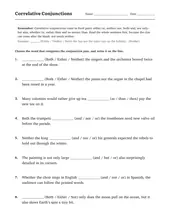
- Correlative conjunctions Correlative conjunctions work in fixed pairs: either/or, neither/nor, both/and, not only/but also, whether/or. Spot the first half, and the second half is already decided.
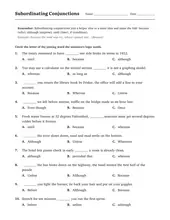
- Subordinating conjunctions Subordinating conjunctions join a helper idea to a main idea and name the link: because (why), although (surprise), until (time), if (condition).
Mixed parts of speech
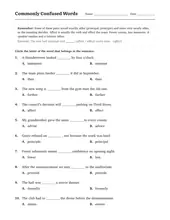
- Commonly confused words Some words sound alike but mean different things: their, there, and they're are three different words.
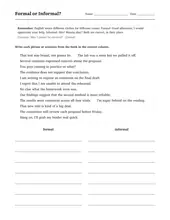
- Formal or informal? English wears different clothes for different rooms. Formal: Good afternoon; I would appreciate your help. Informal: Hey! Wanna play? Both are correct, in their place.
All 7th grade English worksheets →
More 7th grade English: Sentence structure · Punctuation · Spelling · Vocabulary · Reading comprehension · Writing
Grammar at other grades: K · 1st · 2nd · 3rd · 4th · 5th · 6th · 8th