5th grade grammar worksheets
16 grammar skills at 5th grade, one sheet each, free with its answer key: abstract and concrete nouns, commonly confused words, comparing with adverbs, and more.
Nothing in 5th grade grammar matches that. Search every grade
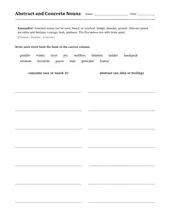
- Abstract and concrete nouns Concrete nouns can be seen, heard, or touched: bridge, thunder, pretzel. Abstract nouns are ideas and feelings: courage, luck, patience. The five-senses test tells them apart.
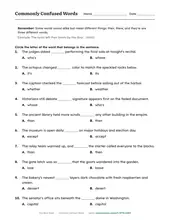
- Commonly confused words Some words sound alike but mean different things: their, there, and they're are three different words.
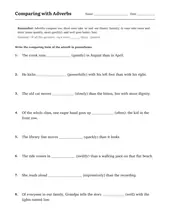
- Comparing with adverbs Adverbs compare too: short ones take -er and -est (faster, fastest); -ly ones take more and most (more quickly, most quickly); and well goes better, best.
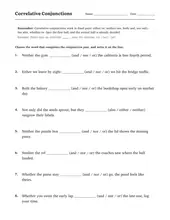
- Correlative conjunctions Correlative conjunctions work in fixed pairs: either/or, neither/nor, both/and, not only/but also, whether/or. Spot the first half, and the second half is already decided.
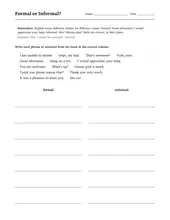
- Formal or informal? English wears different clothes for different rooms. Formal: Good afternoon; I would appreciate your help. Informal: Hey! Wanna play? Both are correct, in their place.
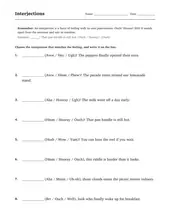
- Interjections An interjection is a burst of feeling with its own punctuation: Ouch! Hooray! Shh! It stands apart from the sentence and sets its emotion.
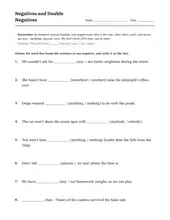
- Negatives and double negatives In standard written English, one negative per idea is the rule. After don't, can't, and never, use any-, anything, anyone, ever: We don't have ANY time, not no time.
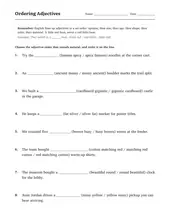
- Ordering adjectives English lines up adjectives in a set order: opinion, then size, then age, then shape, then color, then material. A little red boat, never a red little boat.
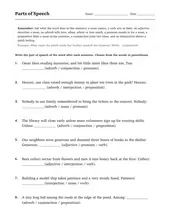
- Parts of speech, new Ask what the word does in this sentence: a noun names something, a verb shows an action or a state of being, an adjective describes a noun, an adverb tells how, when, where or how often, and a pronoun takes the place of a noun.
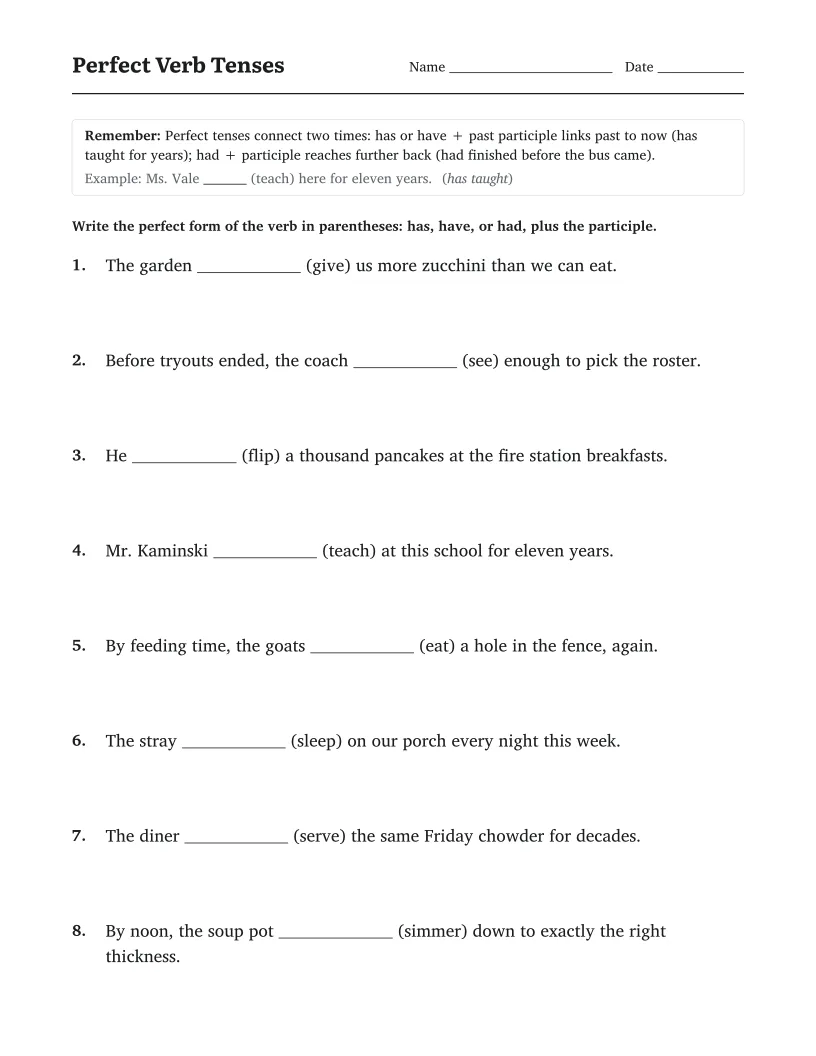
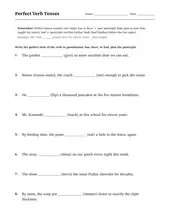
- Perfect verb tenses Perfect tenses connect two times: has or have + past participle links past to now (has taught for years); had + participle reaches further back (had finished before the bus came).
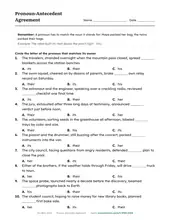
- Pronoun-antecedent agreement A pronoun has to match the noun it stands for: Maya packed her bag, and the twins packed their bags. In school writing, a team acting as one takes its, and each of the girls takes her.
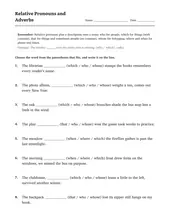
- Relative pronouns and adverbs Relative pronouns glue a description onto a noun: who for people, which for things (with commas), that for things and sometimes people (no commas), whose for belonging, where and when for places and times.
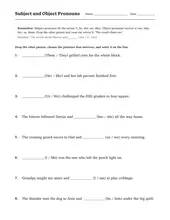
- Subject and object pronouns Subject pronouns do the action: I, he, she, we, they. Object pronouns receive it: me, him, her, us, them. Drop the other person and your ear solves it: 'The coach chose me.'
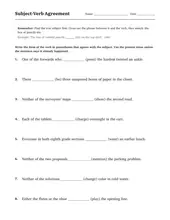
- Subject-verb agreement, new The verb has to match the subject: one dog barks, two dogs bark.
- Subordinating conjunctions Subordinating conjunctions join a helper idea to a main idea and name the link: because (why), although (surprise), until (time), if (condition).
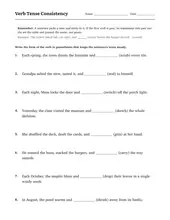
- Verb tense consistency A sentence picks a time and sticks to it. If the first verb is past, its teammates ride past too: she set the table and poured the water, not pours.

All 5th grade English worksheets →
More 5th grade English: Sentence structure · Punctuation · Spelling · Phonics · Vocabulary · Reading comprehension
Grammar at other grades: K · 1st · 2nd · 3rd · 4th · 6th · 7th · 8th