1st grade reading comprehension worksheets
16 reading comprehension skills at 1st grade, one sheet each, free with its answer key: animal reading comprehension, cause and effect, characters and setting, and more.
Nothing in 1st grade reading comprehension matches that. Search every grade
Reading passages
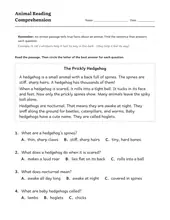
- Animal reading comprehension, new An animal passage tells how an animal's body and habits help it live. Answer from the passage, not from what you already know about the animal.
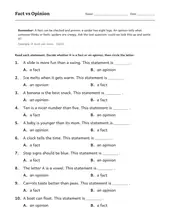
- Fact vs opinion, new A fact can be checked and proven: a spider has eight legs. An opinion tells what someone thinks or feels: spiders are creepy. Ask the test question: could we look this up and settle it?
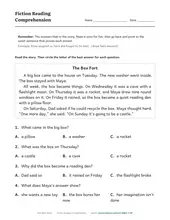
- Fiction reading comprehension The answers hide in the story. Read it once for fun, then go back and point to the exact sentence that proves each answer.
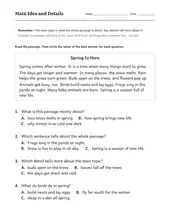
- Main idea and details, new The main idea is what the whole passage is about, in one sentence. The details are the smaller facts that back it up.
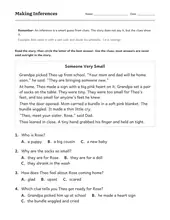
- Making inferences, new An inference is a smart guess the writer never says out loud. You mix a clue from the text with what you already know: if a character shivers and rubs her hands, you can infer she is cold.
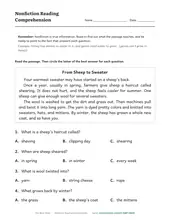
- Nonfiction reading comprehension Nonfiction is true information. Read to find out what the passage teaches, and be ready to point to the fact that answers each question.
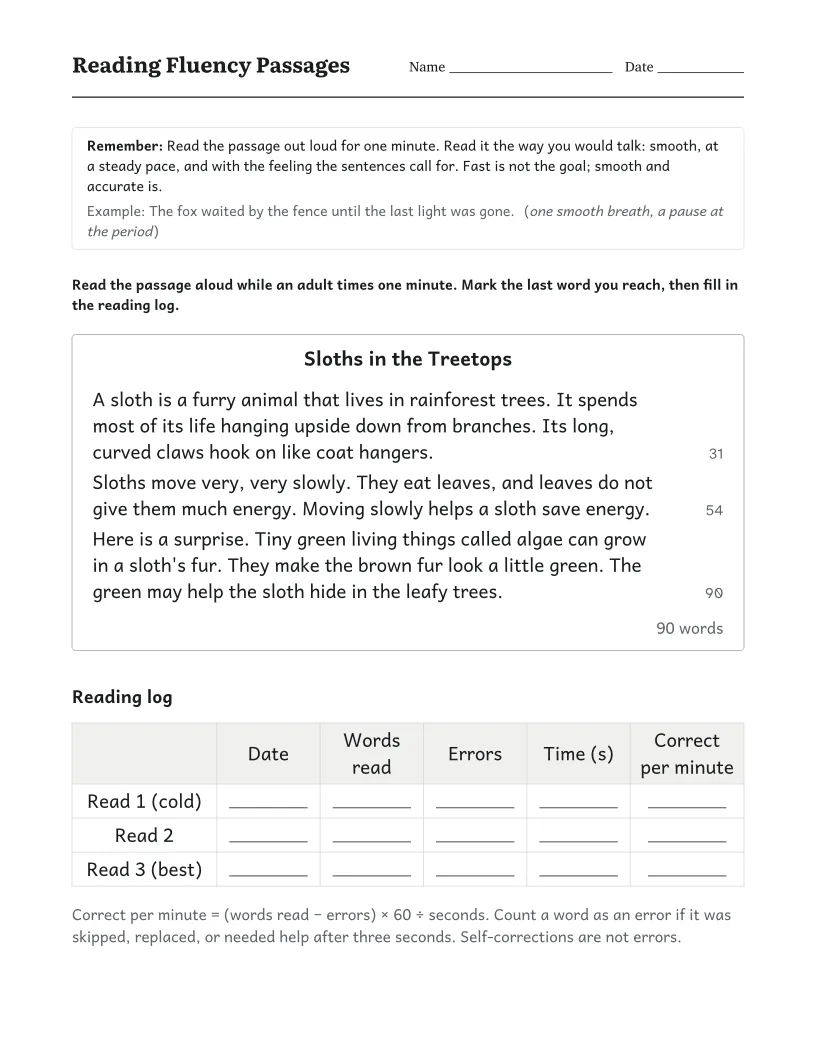
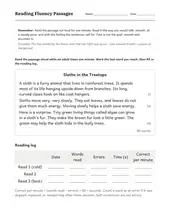
- Reading fluency passages Read the passage out loud for one minute. Read it the way you would talk: smooth, at a steady pace, and with the feeling the sentences call for. Fast is not the goal; smooth and accurate is.
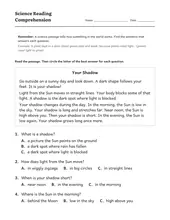
- Science reading comprehension, new A science passage explains how something in the world works. Find the sentence that answers each question, even when it surprises you.
Comprehension skills
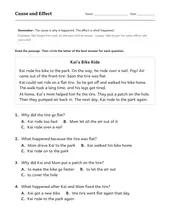
- Cause and effect, new A cause is why something happened. An effect is what happened because of it. Ask: what happened, and what made it happen?
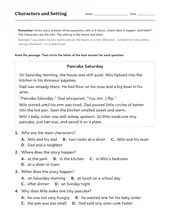
- Characters and setting Every story answers three questions: who is it about, where does it happen, and when? The characters are the who. The setting is the where and when.
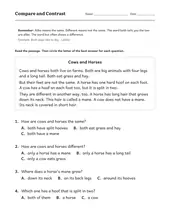
- Compare and contrast, new Comparing finds how two things are alike. Contrasting finds how they differ. Good readers do both at once.
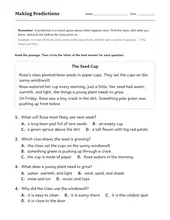
- Making predictions A prediction is a smart guess about what happens next. Find the clues, add what you know, and pick the ending the clues point to.
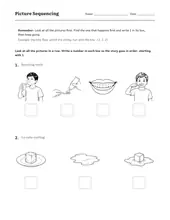
- Picture sequencing, new Look at all the pictures first. Find the one that happens first and write 1 in its box, then keep going.
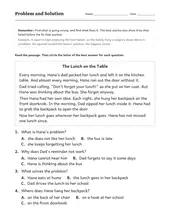
- Problem and solution, new Find what is going wrong, and find what fixes it. The best stories also show tries that failed before the fix that worked.
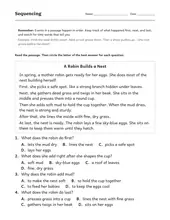
- Sequencing Events in a passage happen in order. Keep track of what happened first, next, and last, and watch for time words that tell you.
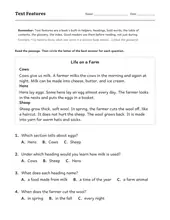
- Text features, new Text features are a book's built-in helpers: headings, bold words, the table of contents, the glossary, the index. Good readers use them before reading, not just during.
All 1st grade English worksheets →
More 1st grade English: Grammar · Sentence structure · Capitalization · Punctuation · Phonics · Vocabulary · Handwriting · Writing
Reading comprehension at other grades: K · 2nd · 3rd · 4th · 5th · 6th · 7th · 8th