The y-to-i rule worksheets
Each print is a different sheet with its own answer key. You don't need to sign up.
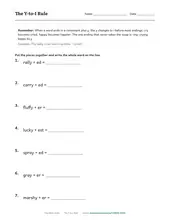
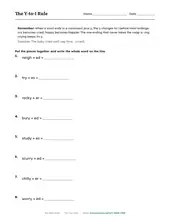
When a word ends in a consonant plus y, the y changes to i before most endings: cry becomes cried, happy becomes happier. The one ending that never takes the swap is -ing: crying keeps its y.
Two grades, one set of sentences: both print from the same 79. Print one here, or open a grade for examples and teaching notes.
Print by grade
-
2nd grade Core grade
Each print is a different sheet with its own answer key. You don't need to sign up.
Words ending in a consonant plus y trade the y for an i before most endings: cry, cried; happy, happier. Second graders apply the swap and meet the contrast case: a vowel before the y (play, enjoy) means no change.
-
3rd grade
Third graders run the rule automatically across -ed, -er, -est, and -es, and can say why played keeps its y while carried loses one. The -ing exception (crying, not criing) rounds out the system: a word that ends in y keeps it before -ing.
More on adding endings
All spelling worksheets →
Or all English worksheets: every grade, every topic.